At Sicché, we're all qualitative researchers: by professional habit, we listen a lot, observe, and analyze what's already out there on the market — but we also often ask our clients, the people who use Sicché, what else they would need. Obviously, to conduct research as well as possible, to work in the best way.
It's not just about AI, which everyone talks about every day now — the hot topic of every LinkedIn post and beyond.
In some cases, the needs are tied to our work as moderators, as researchers who analyze data, as psychologists, sociologists, and anthropologists who deal with people, their thoughts, their feelings.
We still remember the first time this need came up. One of our clients came out with a clear wish: "Couldn't you develop a system where I get concrete help with follow-up probes, so I can focus only on the most important ones?"
Click — lightbulb moment 🚀
At first, we were a little skeptical, we'll admit it.
Also because — you should know — we have a long list of new features and ideas to develop in the platform, and this one hadn't seemed among the highest priorities.
But then something changed over these past few months. We realized that we researchers, in online research (whether it's communities, diaries, pre-tasks, homework, or other types of projects), have too many activities, too many things to pay attention to.
We have to read participants' responses, interact with participants for follow-ups or requests for deeper insight, check who is responding and who isn't, select the most interesting content (e.g. the most relevant verbatims), and of course focus on the content itself, on real-time results — sometimes even paying attention to differences across sub-targets, clusters, and respondent profiles.
And so… the idea of having an "AI colleague," a co-moderator, suddenly made sense. Never as a replacement, but as support — someone to work alongside us.
Let's start with the name: we decided to call our AI moderator assistant "Pino." ("Frank" in English, Paco in Spanish, and so on...)
For several reasons: it's a simple name, clearly human and not coming from the digital world, and it sounds like someone friendly, approachable, easy-going.
Pino AI helps us with the follow-up probes we should be doing, but often don't have the time or energy for.
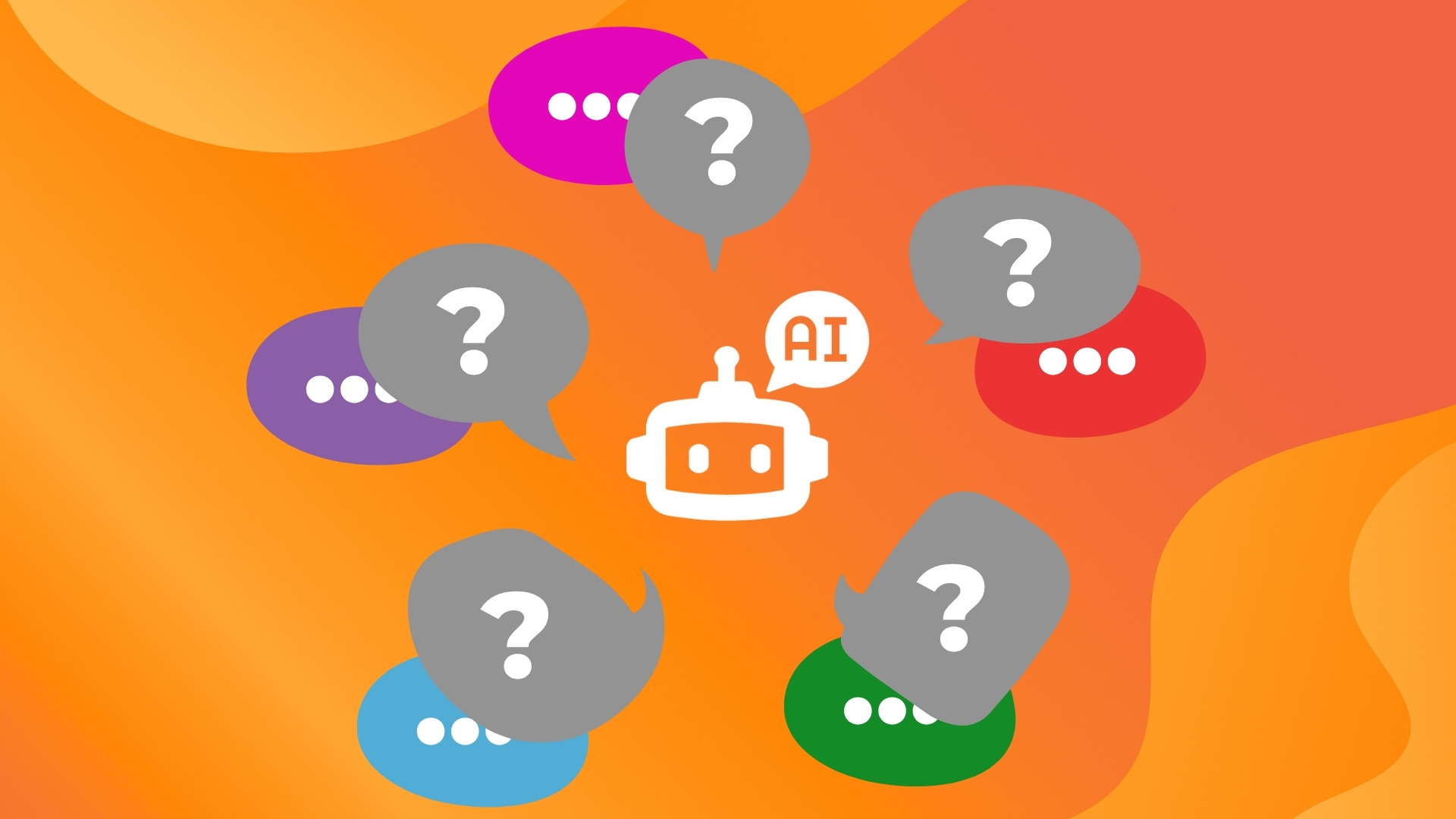
You know those moments when participants answer too briefly, or vaguely, or only address one out of two or three key points in the question? How many times have you ended up without usable data because the answer was simply "yes, I like it," with no explanation of why, no detail about how much they like it, why, what stood out, and so on?
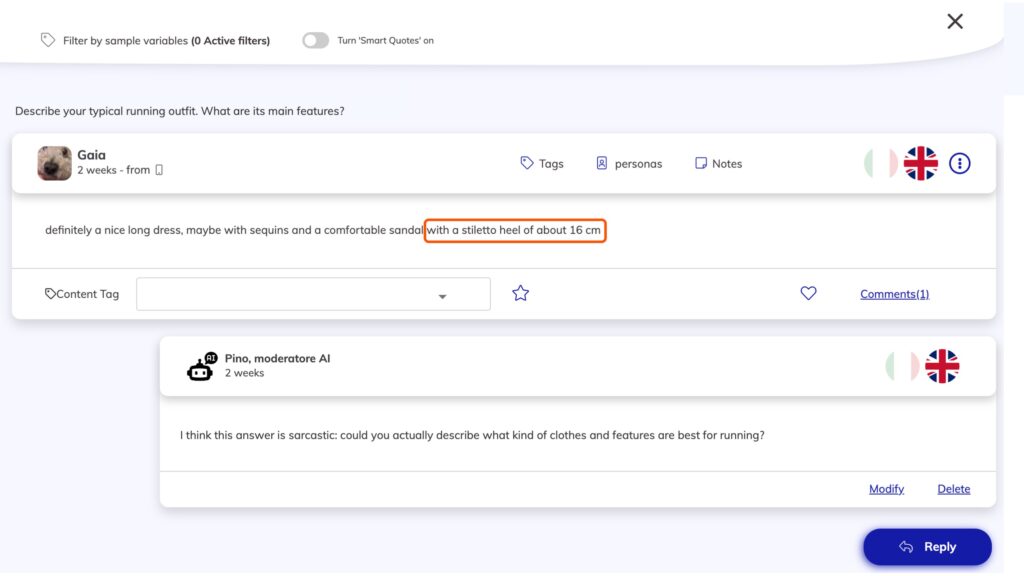
We designed and built Pino AI around a few key needs:
As a highly specialized AI colleague whose job is to request elaboration whenever it encounters insufficient, too-brief, or inadequate responses… Pino AI can be "tuned" in terms of how much pressure it puts on respondents when probing.
There are 3 levels of Pino AI: low-intrusion, balanced, or highly active. In the platform we provide guidance on which approach to use, and during calls we can advise you based on your specific needs.
Pino AI can also communicate in 3 different styles, depending on the context, the type of research, and the target audience: using more formal language (e.g. using the polite "lei" form in Italian), a neutral style, or a more casual, friendly, youthful tone.

Using Pino AI means no more vague, generic, or overly brief responses that are often of little or no use for our analysis and research.
It means protecting the quality of our work — getting complete data and full answers, and motivating even the laziest or most disengaged participants to contribute properly.
Pino AI is included in our annual agreements, while it carries a small additional cost for on-demand rentals.
Give it a try — you'll see you won't be able to live without it 😅