Sicché began as a platform dedicated to qualitative research, an environment where online communities, homework and pretasks find their natural home. However, as market research has evolved toward increasingly hybrid approaches, Sicché has also expanded its potential. The “multi-method” approach is proving increasingly effective: combining quantitative rigor with qualitative depth creates a synergy that greatly enriches the quality of insights. Even when participants are a relatively small number (e.g., 30-40), having a “weight” of certain responses and dimensions helps to better understand certain trends.
Sicché's strength lies precisely in the flexibility with which it allows us to design research that does not become trapped in a single methodological paradigm. Seeing how, over the years, our platform has been used by the institutions we work with (in ways that are really different from how we had thought!) has made us realize the infinite uses it ensures. But what are the types of quantitative questions that can be implemented effectively on the platform? And how to integrate them into a predominantly qualitative research design? Let's see it together.
Structured questions form the backbone of any quantitative research and, on Sicché, all fundamental types are available:
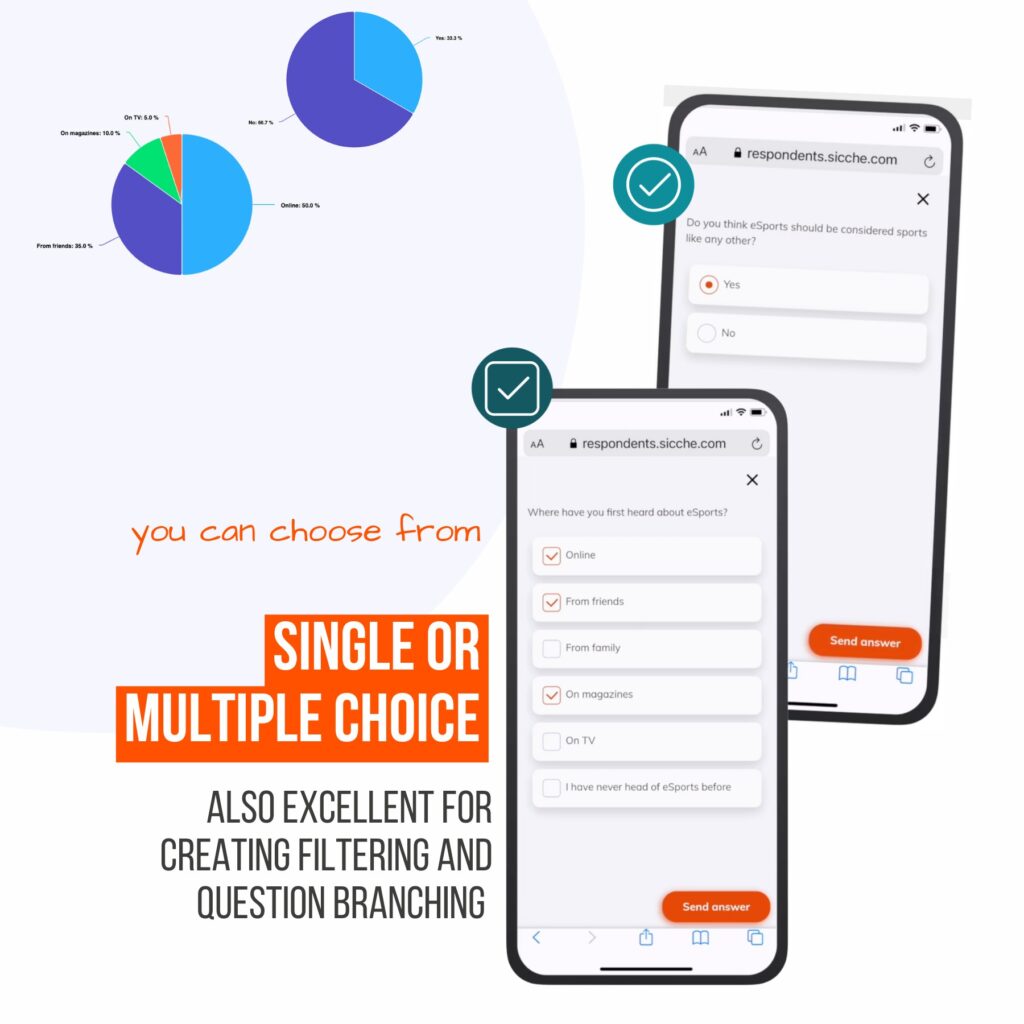
Single-choice questions: Ideal when you want participants to select only one option from those provided. They are perfect for classifying respondents (e.g., users vs. non-users) or for measuring clear preferences. Their strength lies in the simplicity and clarity of the resulting analysis.
Multiple-choice questions: When categories are not mutually exclusive, this type allows for capturing the complexity of preferences or behaviors. Particularly useful for mapping usage occasions, sought-after benefits, or relevant attributes of a product/service. Additionally, it is always possible to add a qualitative comment to the response provided.
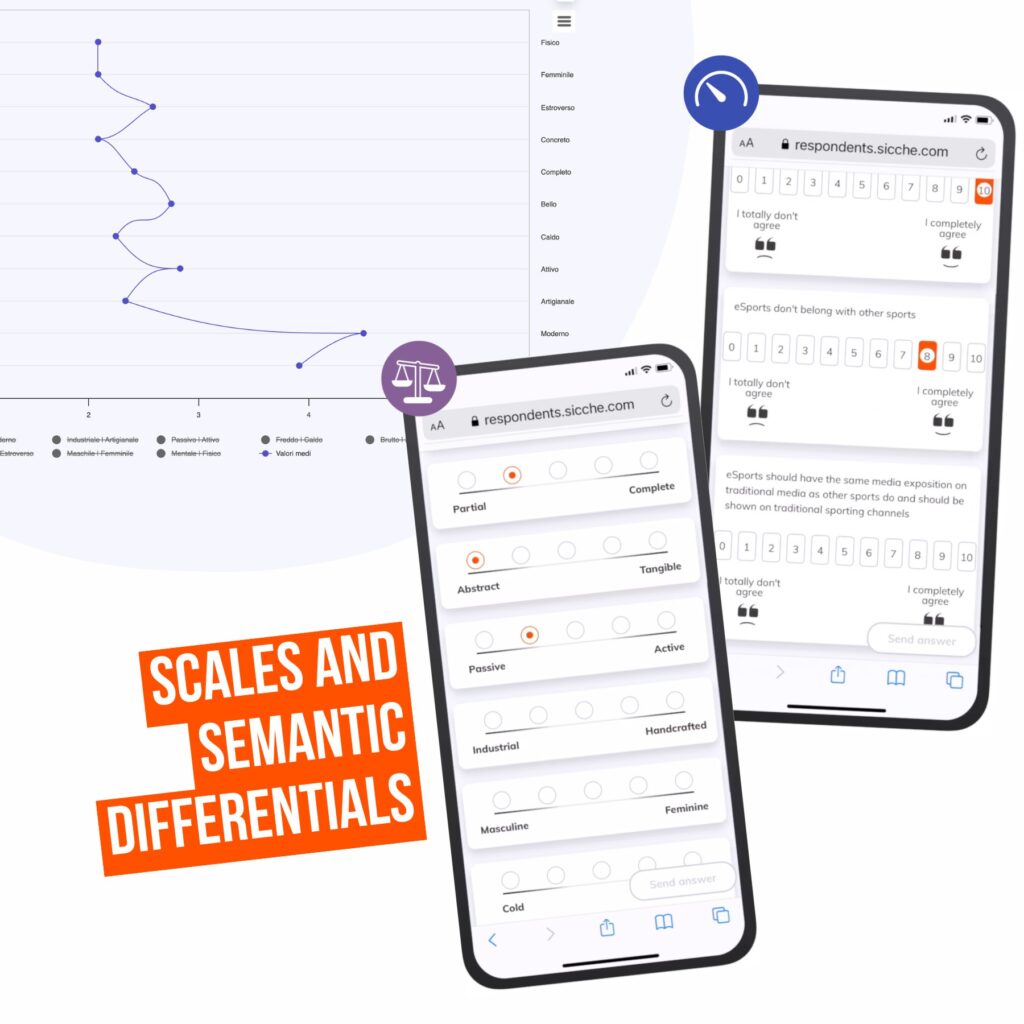
Rating scales: From the timeless Likert scale to numerical scales, these tools allow for the quantification of attitudes, opinions, and perceptions. On Sicché, both the visual appearance and the semantics of the scales can be customized to perfectly fit the target audience and research context. Moreover, it is always possible to request a qualitative comment for each response item.
An important note: Even with structured questions, formulation is crucial. Clarity and the absence of ambiguity are essential requirements for obtaining reliable data!
Last but not least: These types of questions can also be used to automatically assign variables to participants, thereby creating more or less complex branching logic. This allows respondents to see or skip certain activities or subsequent questions based on the answers they provided to previous ones.
Sicché doesn't limit itself to traditional quantitative questions but offers a range of options that combine the rigor of quantitative research with the exploratory depth typical of qualitative research:
Semantic differential: Particularly effective for mapping the perceptual positioning of brands or products. On Sicché, you can create custom bipolar scales that allow for an immediate visualization of the perceptual profile of the object under study. We’ve included 70+ ready-to-use pairs of opposites, but you can also input any terms you wish. And... hard to believe, but we are the only qualitative platform in the world to offer this type of question—available since 2019 😊
Ranking: When it is necessary to establish hierarchies of preference or importance, ranking questions compel participants to make prioritized choices, highlighting what truly matters in the decision-making process. You can ask participants to rank their top 3 or 5 most (or least) preferred items among those shown.
Category grouping: This method allows participants to organize stimuli into groups based on criteria they find relevant. It’s a powerful tool for uncovering spontaneous cognitive patterns and implicit taxonomies. Fully usable from a smartphone (like all other question types), it follows the classic logic of assigning items to rows and columns.
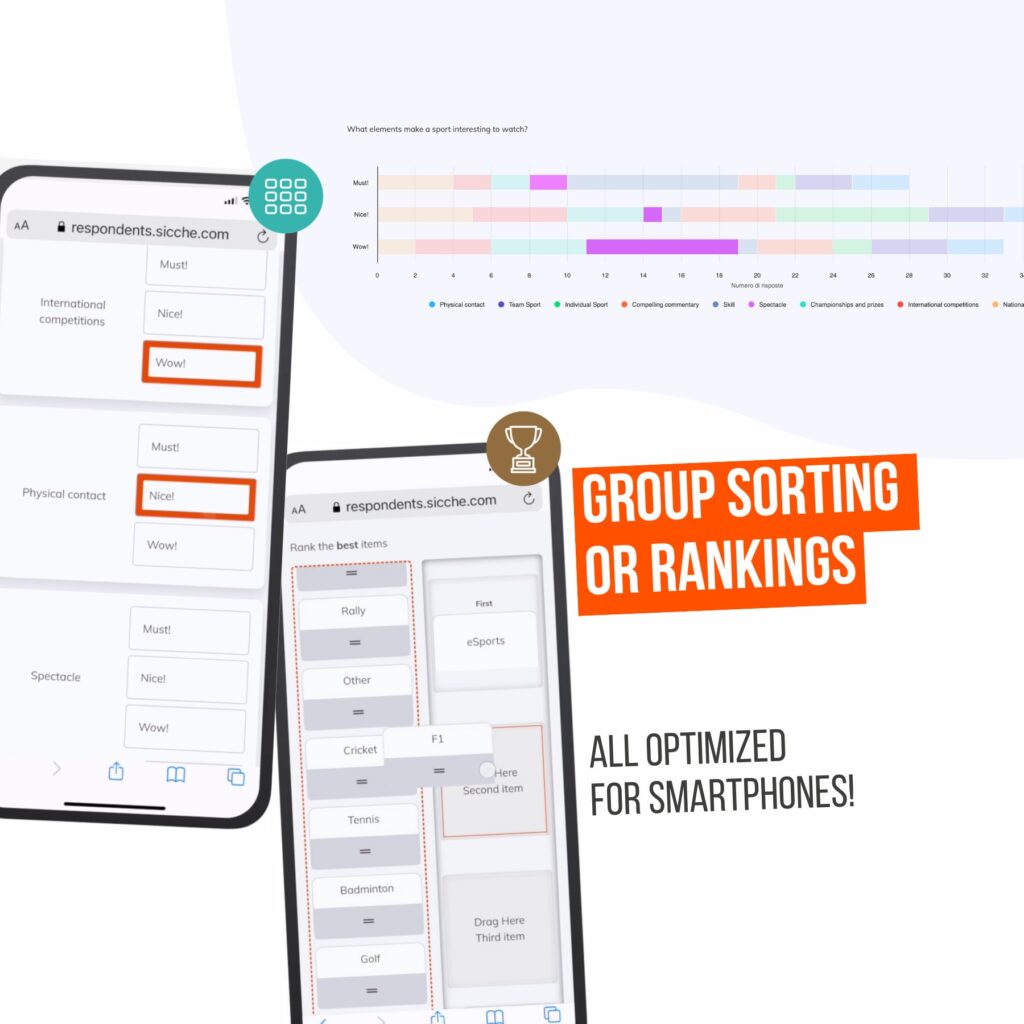
Image association tests: The evocative power of images, combined with the quantitative structure of the question, creates an ideal bridge between rational and emotional approaches. Sicché allows you to use images as response options, making it easier to access the non-verbal dimensions of experience. We offer 8 associative tests already available on the platform, including one that has been scientifically validated. But you can also upload your own images if you prefer (they must be square format). Oh, and we almost forgot... once again, we are the only qualitative platform in the world to offer this type of question—available since 2019 😊. We’re very proud of it!
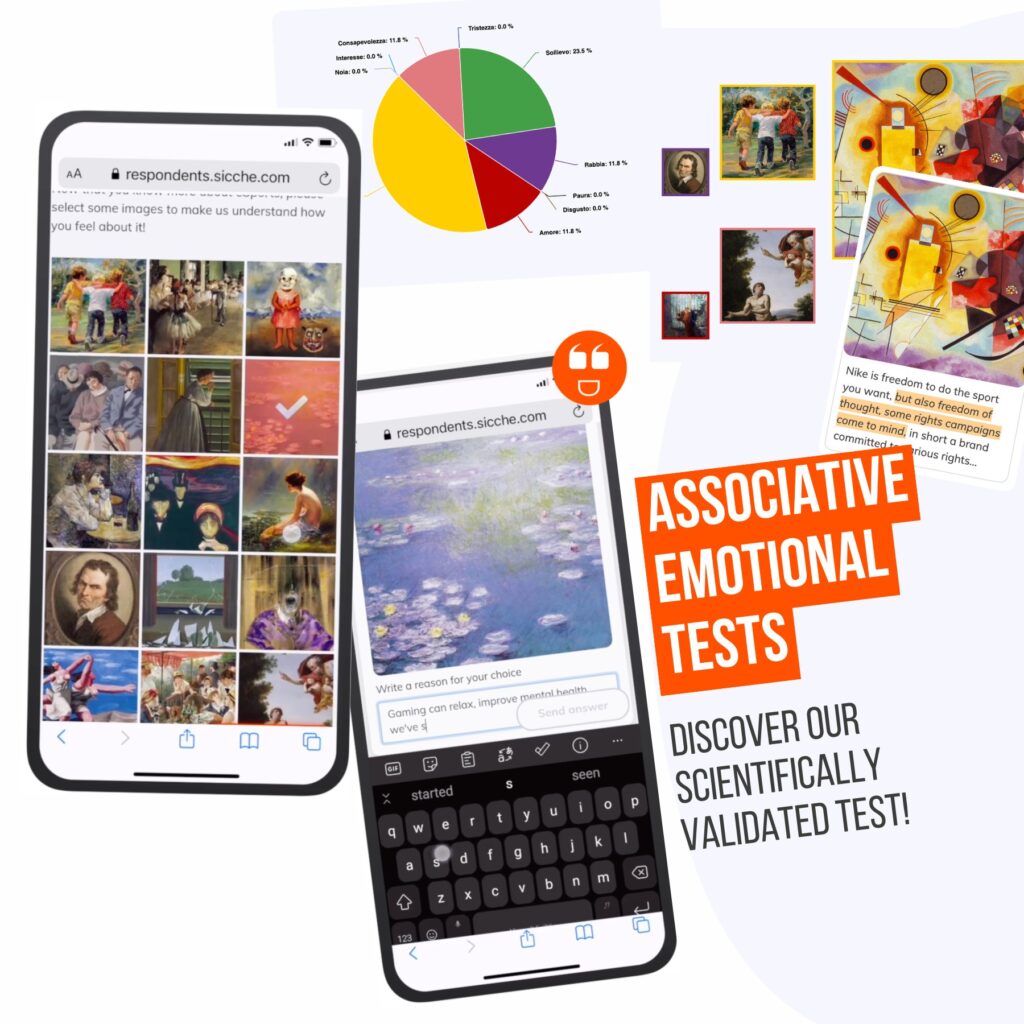
These types of “hybrid” questions are the most effective tools for capturing the complexity of human experiences without sacrificing the ability to quantify and compare.
The real “magic” happens when quantitative and qualitative questions are skillfully alternated. On Sicché, you can easily move from a structured question to an open-ended one that allows for a deeper exploration of underlying motivations. And not just in text format: the platform supports voice and video responses as well, offering valuable insights into participants’ non-verbal expressiveness.

A particularly interesting feature is the ability to create flow branching based on responses to single- or multiple-choice questions. This allows for personalizing the research path according to each participant’s specific characteristics or experiences, resulting in a more relevant and engaging research experience.
For example, after identifying users of a particular product category through a single-choice question, they can be directed to a set of questions focused on their usage experience, while non-users follow a path centered on adoption barriers.
The alternation between quantitative structure and qualitative depth generates much richer and more actionable insights than relying on a single approach. Sicché provides the tools to orchestrate this methodological symphony with elegance and precision, moving beyond the qualitative-quantitative dichotomy toward a truly integrated approach.
Whether it's an online community, a co-creation forum, or an enriched questionnaire, Sicché proves to be a valuable ally for those who believe that human complexity requires research tools that are equally sophisticated and flexible.